Teaching prompts was hot in 2024. These days few people talk about prompts anymore. Two reasons: a single-line prompt does not carry much on its own, and the focus has moved up to "steering engineering"; and AI has become so smart that rigid instructions actually cap its ability. This piece covers the "intent first" mindset: how to make your goal and your bottom line clear, then let a smarter AI figure out the better method, with three copy-paste prompts.
· People who have learned prompting and can write long instructions, yet feel AI still just does exactly what they wrote, with no better output
· People who want AI to help with their workflow, but worry it will change things on its own and break how they already work
· People who want to know what "context engineering" and "steering engineering" actually mean and how they differ
· Understand the difference between the four stages: prompt engineering, context engineering, steering engineering, loop engineering
· Understand why, now that AI is smart, rigid instructions are actually a waste
· Take away three copy-paste "intent first" prompts: give the goal and open exploration, confirm by restating, compare without breaking your workflow
- Stop Writing Rigid Instructions: Say What You Want, Let AI Handle the Rest (you are reading this)
- The Boss’s Steering Mindset: Say to AI What You Would Never Say to an Employee
Why nobody talks about prompts anymore
Around 2024, teaching prompts was hot. Back then it was all "ten magic spells to make AI obey" and "the complete prompt template pack." Now you will notice nobody talks about prompts anymore.
The first reason: a single-line prompt does not really mean much. Hoping that one beautifully written instruction will make AI produce something great has a very low ceiling. The focus moved up from "how to write one line" long ago.
Here is the line of evolution:
How to phrase one instruction
Manage the whole conversation
Give intent, guide it
Design a self-running loop
This piece stands at stage three: steering engineering. Its entry mindset is "intent first." As for going further and designing your whole workflow into a self-running loop, that is stage four, loop engineering. You can read What Is Loop Engineering and Three Workflows Redesigned as Loops next.
AI is already smarter than your process
Before the second reason, look at a comparison.
Back in 2024, AI’s IQ was maybe 60. The way you worked was this: the process I could think of was 100, I wrote out that 100-point process in full detail, had it follow along, and it could reach 80 to 100. So back then, writing the process out rigidly and clearly was right, because AI could not think of anything that good on its own; you had to pull it up with your 100.
It is different now. Today’s AI is very smart. I can only think of 100, but it might think of 200 or 300 on its own. The masters online already have 500- and 1000-point approaches.
So the question becomes:
That detailed, rigid process helped AI in 2024, but now it ties AI down. You use a 100-point frame to cap something that could reach 300 at 100.
That is why the focus shifts from "how to write a more complete instruction" to "how to make the intent clear, then let go."
First, four terms: explained with a horse race
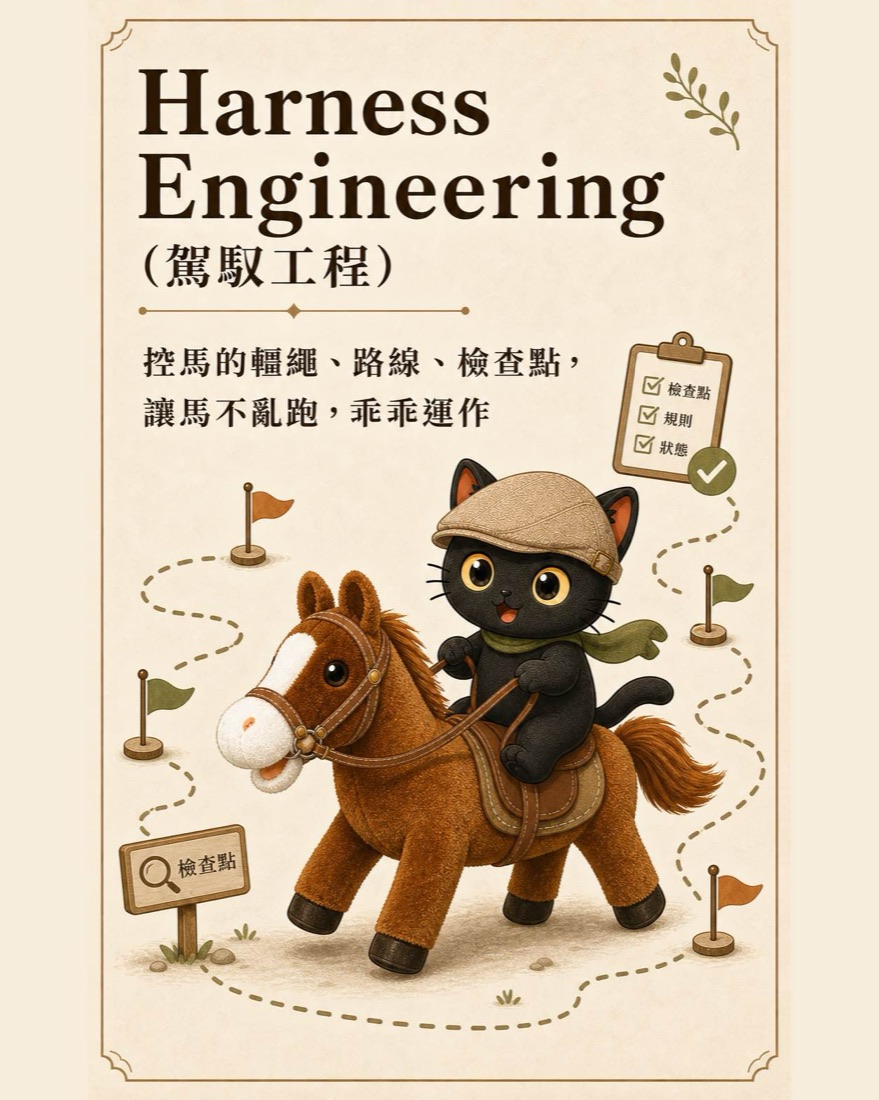
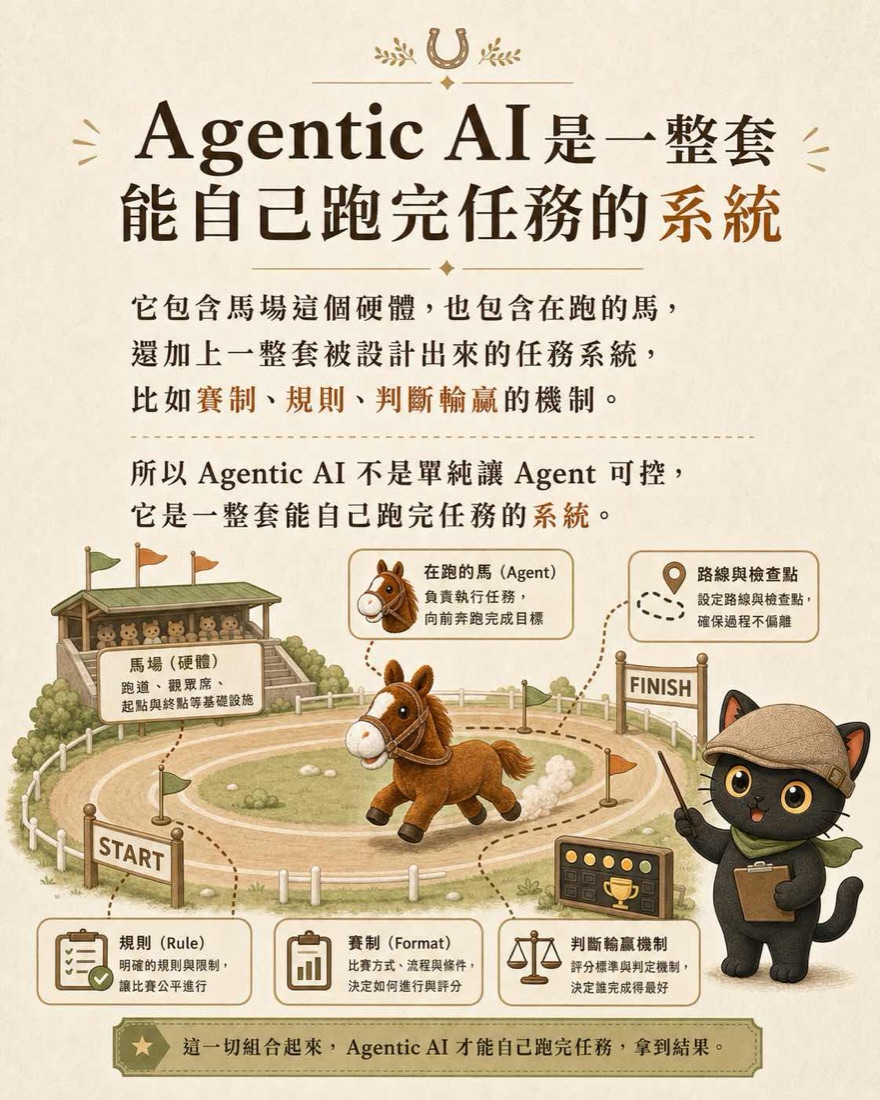
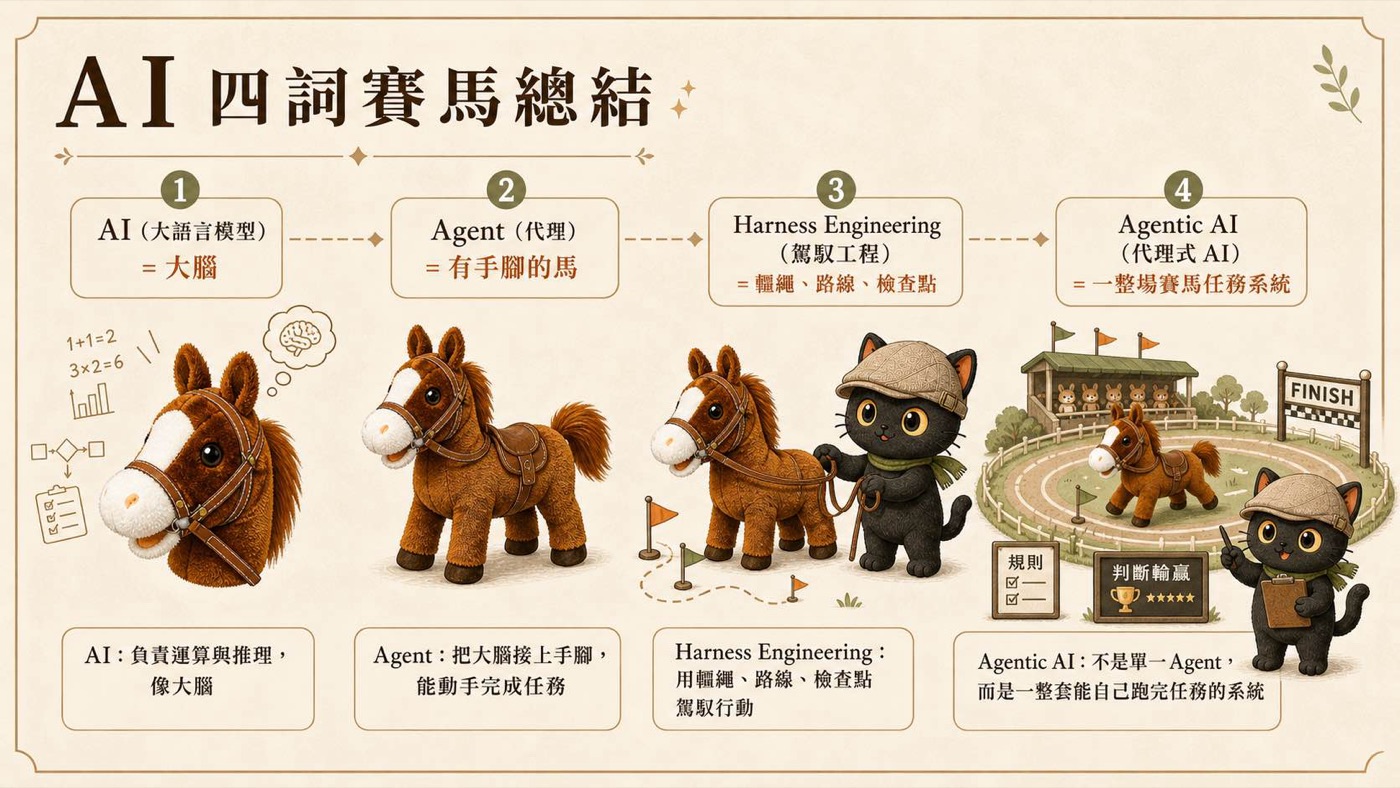
The term "steering engineering" often shows up tangled together with AI, Agent, and Agentic AI. Before we get to intent first, let a single horse race explain all four terms at once. (The four stages above are about how the method evolved; the four terms here are about what each thing actually is. Two different axes.)



Intent first: give direction, not shackles
Intent first means that when you give an instruction, you first make the most important thing clear: why you are doing this, and to what standard. That is your intent and your goal. Once that is clear, leave the specific method to a smarter AI.
In practice there are three moves.
Give it your steps and goal, but let it look for a better method.
Have it restate its understanding and planned method back to you.
Have it check against your existing workflow: improve, never break.
Move 1: Give it your steps and goal, but let it find better
You can still give it your original steps; that is your starting point. The key is to add one line allowing it to find a better approach, as long as it does not go against your original intent and principles.
Core principle
Treat your method as a "reference starting point," not an "unchangeable rule." Tell it clearly: you may search online, find someone else’s better method, and surpass mine, as long as you do not go against what I truly want.
Reusable prompt
One handy line to add: when you get stuck, first look up how others solved it, work it out yourself after referencing that, then report back what you did. A good employee does not come to you with every small problem, and neither should AI (as long as your AI can search online).
Move 2: Always have it restate to confirm at the end
Letting go is not the same as letting loose. You open it up to find a better method, but you need to confirm it truly understands what you want and that its new method really achieves your goal. So at the end, have it restate and report back.
Core principle
Have the AI restate, in its own words, its understanding and the method it plans to use. Ask it to make two comparisons: whether it got your meaning, and how its chosen method compares to yours. If it misunderstood, you catch it right here.
Reusable prompt
This is "plan mode": first have the AI write out how it plans to do it as a plan, so it thinks the whole thing through; once you have reviewed it and it looks fine, let it execute the plan. The more complex the task, the more this step saves back-and-forth and stops it from charging off in the wrong direction.
Move 3: Have it compare, do not break your existing workflow
The biggest risk with open exploration is that, in the name of "better," it breaks something that was working or clashes with your other workflows. So draw a clear line: improve is fine, break is not.
Core principle
Before it acts, have it compare against your existing workflow and confirm the new method will not conflict with yours, will not break what you already use, and will not go against your thinking. The freedom to explore rests on not crossing that line.
Reusable prompt
Recap
- A single-line prompt has a low ceiling. The focus has moved up from prompt engineering to context engineering, steering engineering, and then loop engineering.
- In 2024 AI scored 60, so your rigid 100-point process helped it; now AI can reach 200 or 300, and your rigid process ties it down to 100.
- Intent first means making "why you are doing it and to what standard" clear, and leaving the method to a smarter AI.
- Three moves: give steps but let it find better, have it restate to confirm at the end, have it compare without breaking your existing workflow.
Common pitfalls (and fixes)
A reminder about where you stand
The point of steering engineering is not how fast AI runs, but making its intelligence grow on top of your judgment. You are responsible for making the intent clear: why and to what standard; that part is yours. It is responsible for making the method better than you imagined. The intent is yours, the method can be its, and the final call is still yours. Only when you sharpen your intent can you steer a collaborator smarter than you.
This piece covers "why intent first" and the three entry moves. The next piece covers how to push AI to deliver and how to steer it like a boss, with the ten steering questions, inward questioning, and the good-boss comparison: The Boss’s Steering Mindset: Say to AI What You Would Never Say to an Employee (Series 02).
Further reading: Docs Are the System: How Non-Engineers Design Agent Frameworks, What Is Loop Engineering.