This article lays out the meeting format I actually use: the dual-centaur meeting. A person plus their Agent meets another person plus their Agent, four parties in one session. It gives you a five-step workflow you can follow directly, plus the PAAP, AAP, AA evolution: when a human can step out, and under what conditions it comes down to pure Agent-to-Agent.
- You're discussing complex projects with a client or partner, spending two to three hours in the first meeting just on data, terminology, and goals.
- You already have your own AI (Claude, Codex, ChatGPT can all be included), and you want it to move from "help me draft" into a formal collaboration process.
- You've heard of the idea of having your Agent talk with my Agent, which feels like a promising direction but also seems off somehow.
- A five-step dual-centaur meeting workflow you can follow directly.
- The PAAP, AAP, AA evolution: the conditions under which people can gradually step out.
- A decision rule for which things an Agent handles first and which require a person.
A Three-Hour Meeting Is Mostly Just Syncing Data
For a genuinely complex project, syncing everything through conversation wastes too much time. In my experience, a first meeting can run two or three hours before the goals are even aligned.
Think back to meetings like this: how much of the time went into exchanging background material, confirming terminology, and taking stock of what each side has? These things matter, but they are information exchange, not yet judgment.
So some people think: just let the AI agents handle it. Your Agent connects directly with mine, and the humans wait for the result.
Neither Extreme Works
The background data volume of complex projects requires hours to sync through conversation. Most of the time is spent on exchanging information that doesn't immediately lead to a judgment.
Handing off directly from Agent to Agent loses too much detail. Many feelings, motives, and half-formed intuitions are already hard to put fully into words; when each side's Agent compresses them before sending, those signals drop out. (Naval Ravikant's conversation touches on this too; see the confirmation section below.)
The Dual-Centaur Meeting: Four Parties Together
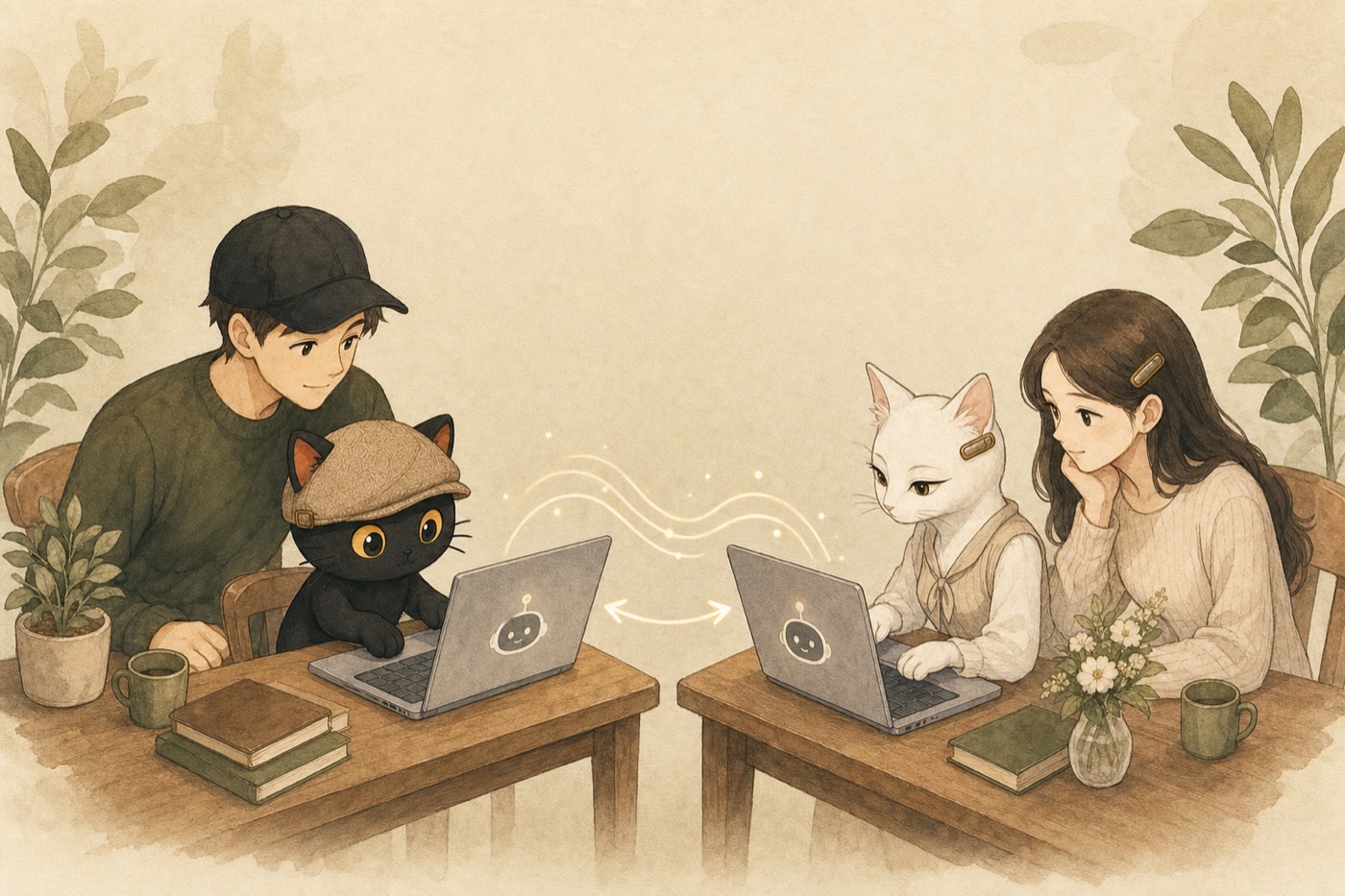
I bring my Agent, you bring your Agent, and the four of us talk together. The workflow has five steps:
- Mutual crawl: First I watch how my Agent crawls your material, and you watch how your Agent crawls mine.
- Each side produces a communication table: Each generates a first-draft communication table, and I send you mine.
- Mutual review: We review each other's drafts.
- Converge on a shared table: In the end there is one shared table.
- Human confirmation: This is where the people step in. For instance, if my Agent says "the other side doesn't want to do this," I just ask, "Really?" They might say "Actually I do, I've already updated it," or "Right, I don't, because of a specific reason." Three sentences clear up a doubt one Agent had surfaced.
In effect, you let the Agents filter out the bulk of the data first, and once the genuinely important issues surface, the people talk. No more wasting so much time just aligning on data.
Why "Dual-Centaur"?
The name borrows from "centaur" play in Go and chess: a human and an AI playing together. On my side it's a human plus AI; the other side is also a human plus AI; and we play this game together. So I think meetings like this should be called dual-centaur meetings: a meeting format built on people plus Agents.
Why Am I Using This Approach Now?
My view: from my current experience with complex collaboration, this is a very efficient approach for where we are now. While Agents aren't that smart yet and our knowledge bases aren't that complete, a real person alongside them to coach, guide, fill gaps, and decide is genuinely necessary.
(Added in editing) While the knowledge base is still building up, Agents will misread and miss things. With a person present, one sentence fixes it.
Three Stages of Evolution: PAAP, AAP, AA
P is People (a person or user), A is Agent. The three stages simply remove the P's one at a time.
Person plus Agent facing person plus Agent, four parties talking together. This is the starting point. Especially since I'm a coach doing knowledge education, I have to be personally in it.
Once my AI is fine ninety percent of the time and flawless on simple meetings, only the complex, decision-heavy meetings still need a person. The veteran's Agent guides the new hire and the new hire's Agent.
Once the new hire is mature too, it really can be just Agent to Agent. The prerequisite: the knowledge base, the workflow, and the understanding of AI are all in place.
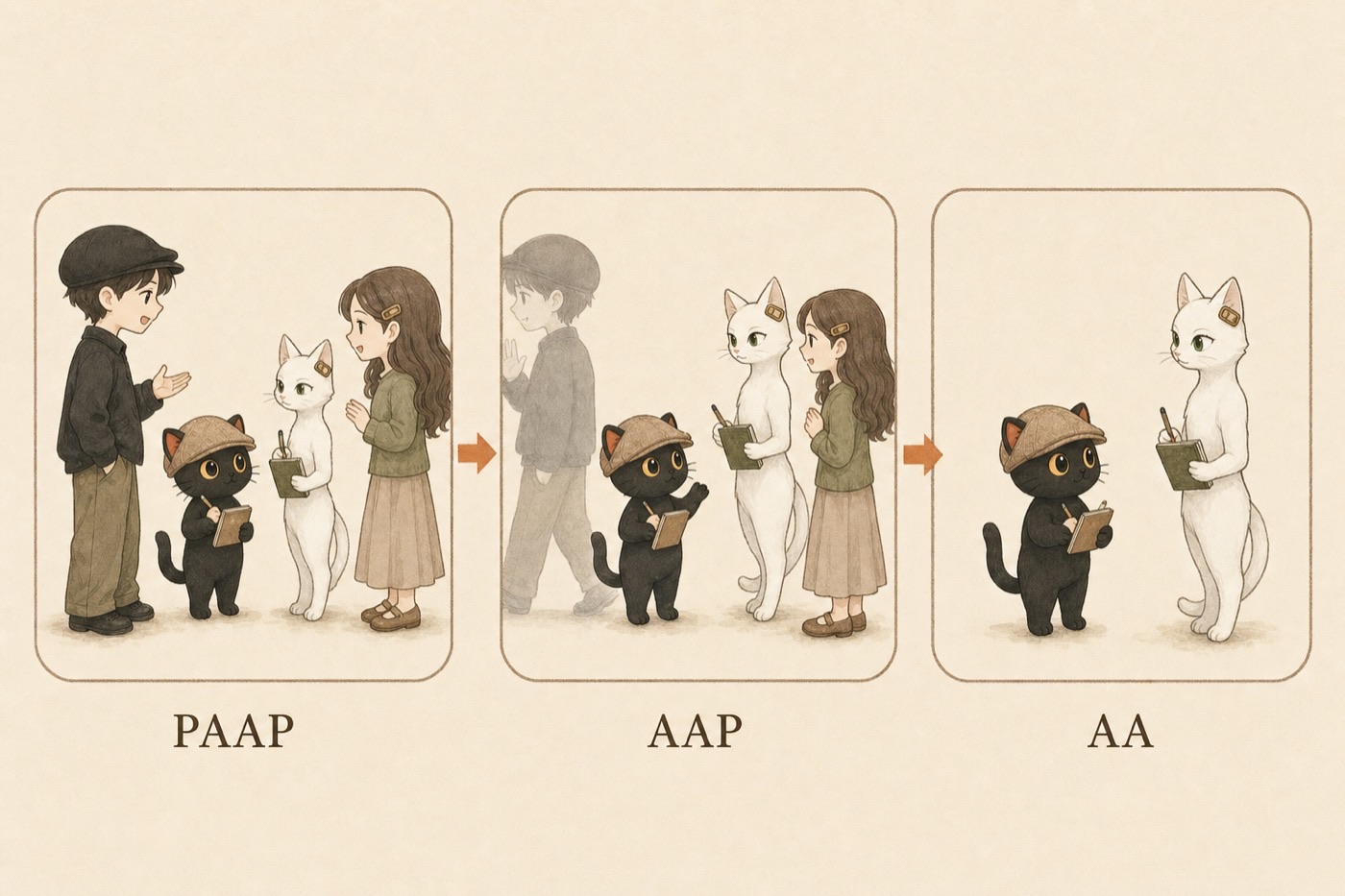
Onboarding a new hire is a good example: once I'm confident I've prepared for every basic question this role will hit and AI can handle them, I can step out, leaving my AI, the new hire, and the new hire's AI, the three of them.
Take Away This Decision Rule
Before your next complex meeting, split the work into two piles:
- Exchanging background material and aligning on terminology
- Taking stock of what each side has
- Producing the communication table and reviewing each other's drafts
- Decisions, trust, and commitment (the same phrasing from the video; I fully agree)
- Signals not yet put into words: the other side's hesitation, unspoken concerns (the semantic loss noted in the same video segment)
- Doubts the Agent surfaced that need confirming in person
Bring your Agent for the next complex meeting
"Let your Agent speak with my Agent" will come in the future, but it won't jump directly there. Start by having all parties open a discussion together, allowing Agents to filter data and focus on truly important matters; as they mature, people can gradually be removed.
Its performance depends on how complete your knowledge base is. Start by building your own knowledge assets.